





The development of effective vaccines against animal anthrax remains a strategic priority in modern veterinary bacteriology and biotechnology. Comprehensive molecular and genetic characterization of vaccine strains is a fundamental requirement for ensuring their safety and efficacy.
Within the framework of the doctoral research, genetic characterization of the Bacillus anthracis Sterne 34 F2 strain was conducted, including analysis of regulatory factors involved in sporulation to assess the safety profile of the vaccine strain. Bacillus anthracis Sterne 34 F2 и анализ факторов регуляции спорообразования с целью оценки безопасности вакцинного штамма.
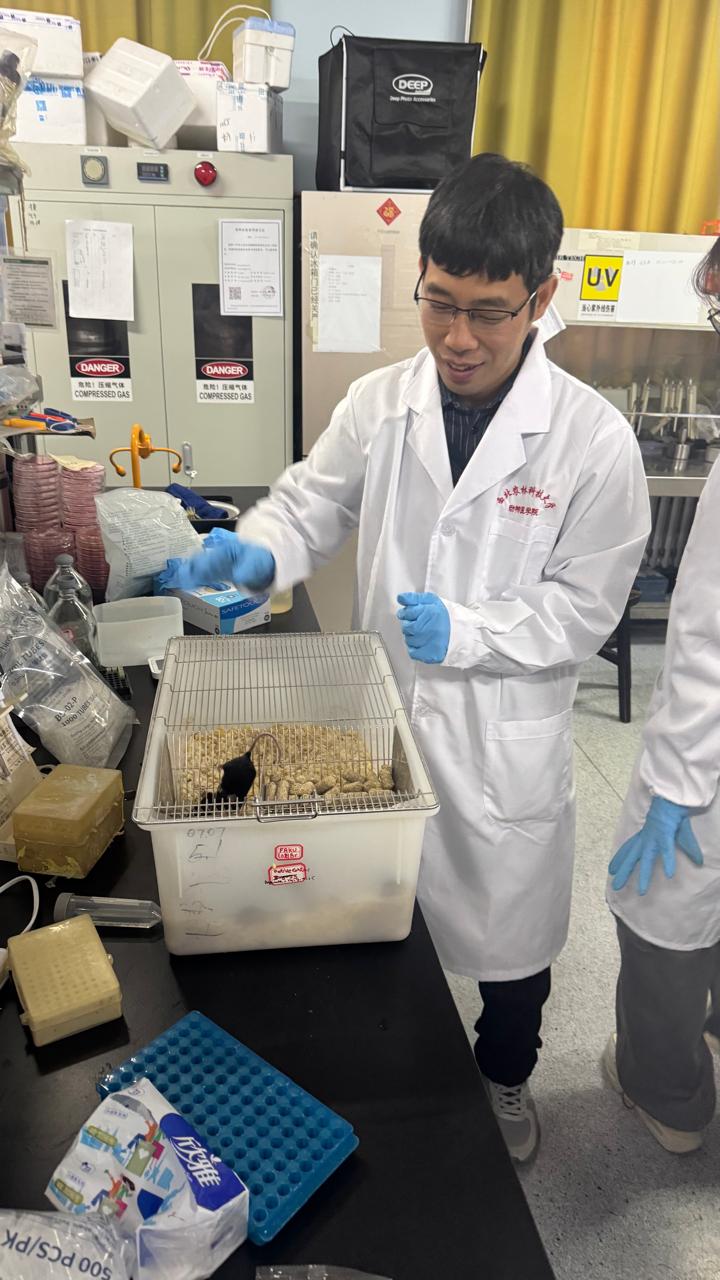
From November 3 to December 2, 2025, A. Saparov, research scientist at Antigen Research and Production Enterprise LLP and PhD candidate, completed a research internship at the College of Veterinary Medicine, Northwest Agriculture and Forestry University (China) under the supervision of Associate Professor Wen-Tao Ma.
The study focused on attenuation stability, immunogenic properties, and molecular-genetic characterization methods applicable to production vaccine strains.
At the molecular level, both Sterne 34 F2 and VNIIVVM-55 strains retain the pX01 plasmid encoding toxin genes. The principal difference is the absence of the pX02 plasmid in Sterne 34 F2, which is responsible for capsule synthesis.
The Sterne 34 F2 strain is a live attenuated vaccine strain lacking pX02 while retaining pX01, enabling active production of protective antigen (PA) and high immunogenicity.
In contrast, the VNIIVVM-55 strain represents a double-attenuated strain (loss of pX01 and pX02 or weakened pX01), demonstrating a higher safety profile but lower immunogenicity compared to the Sterne strain.
The obtained results provide a scientific and technological basis for further improvement of national anthrax vaccine production technologies.
Main Areas of the Internship:

- DNA extraction from bacterial isolates
- Determination of DNA concentration using nanospectrophotometry (NanoDrop)
- Agarose gel electrophoresis
- DNA quality visualization and assessment
- PCR principles, primer design, and reaction optimization
- Electrophoretic analysis of amplicons
- Amplicon purification and DNA sequencing
- Genomic data analysis and submission to international databases